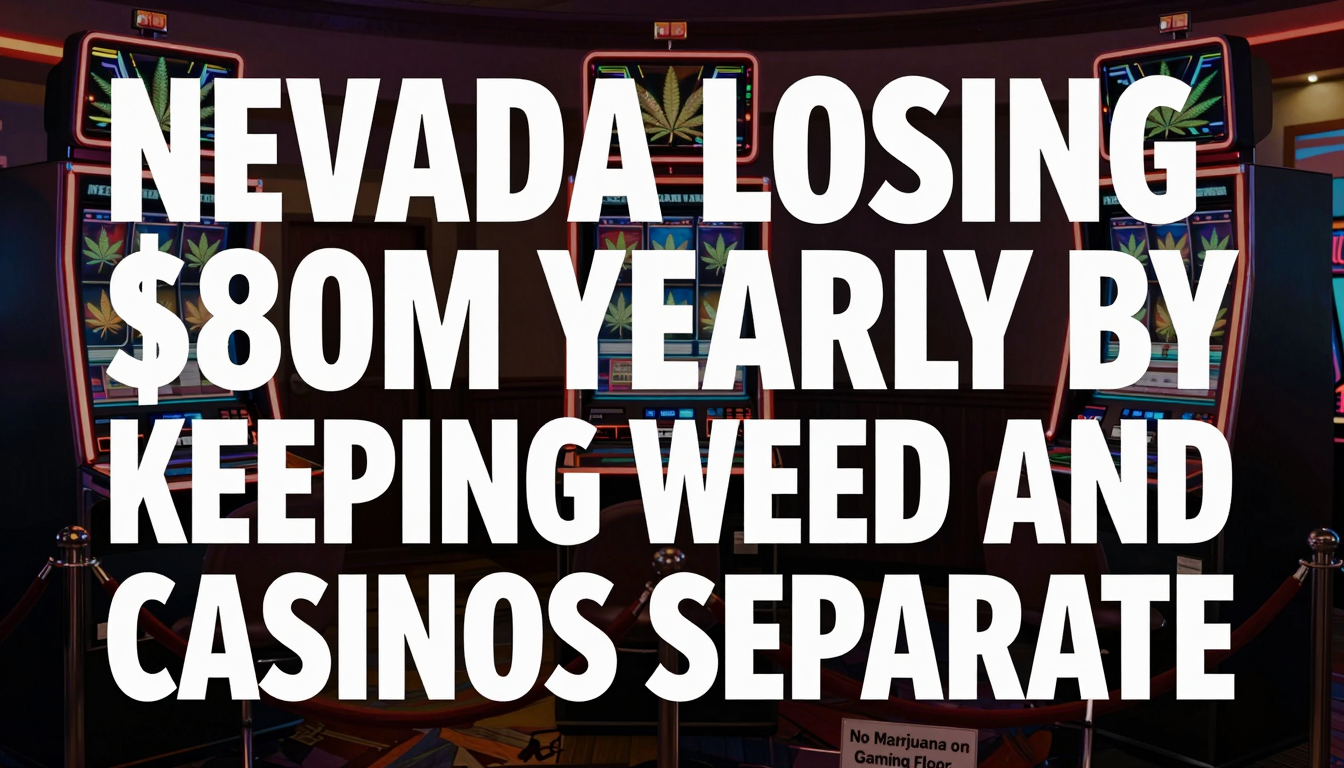
Imagine walking off the Las Vegas Strip, into a casino lobby, and being able to buy a pre-roll with your cocktail. That’s the future Nevada is leaving on the table—to the tune of $80 million in lost tax revenue every single year, according to a new economic analysis from the University of Nevada, Las Vegas (UNLV) Center for Business and Economic Research. The report, released last week, quantifies what many in the industry have long suspected: the state's strict policy barrier between legal cannabis and casino operations is costing Nevada dearly in Nevada cannabis casino revenue loss.
The $80 Million Hole in Nevada's Budget
When Nevada legalized recreational cannabis in 2016, it seemed like a no-brainer for a state that already thrived on vice tourism. But regulators drew a hard line: no cannabis consumption or sales on casino floors, hotel rooms, or any licensed gaming establishment. The result? A thriving recreational market that's still largely locked out of the very tourism infrastructure that makes Nevada famous.
The UNLV study crunched the numbers on potential on-site cannabis sales in casinos—think dispensary kiosks in hotel lobbies, consumption lounges attached to poker rooms, or even cannabis-friendly hotel packages. Their conclusion: Nevada is losing between $60 million and $80 million annually in combined state and local tax revenue by maintaining this separation. That's money that could fund schools, infrastructure, or addiction services.
For context, Colorado, which allows cannabis consumption in certain licensed hospitality venues, generates roughly $12 million per year in additional tax revenue from cannabis tourism alone. Nevada's potential is exponentially higher given its 40 million annual visitors.
Why the Separation Exists
The policy stems from the state's powerful gaming control board, which has historically feared that cannabis would complicate federal banking laws for casinos or scare off older, conservative high-rollers. There's also the lingering stigma: despite federal rescheduling efforts in 2025, cannabis is still a Schedule III substance, and casinos operate under strict federal anti-money laundering rules.
But that logic is fraying. A 2025 survey by the Las Vegas Convention and Visitors Authority found that 63% of visitors under 40 said they'd be more likely to book a hotel that offered legal cannabis amenities. And in a post-pandemic rebound, Nevada can't afford to ignore younger demographics.
The Revenue That's Going Up in Smoke
Let's break down where that $80 million comes from:
Direct Sales Tax
If just 10% of the 40 million annual visitors purchased a $30 cannabis product on-site, that's $120 million in gross sales. Nevada's 15% excise tax plus local sales tax (averaging 8.25%) would yield roughly $28 million in direct tax revenue.Licensing and Fees
Casino-adjacent dispensaries or consumption lounges could command $50,000–$100,000 annual licensing fees. With just 50 such establishments across the state, that's another $2.5–$5 million.Hotel and Tourism Uplift
This is the big one. A 2023 study from the Cannabis Tourism Association found that destinations with cannabis-friendly accommodations see an average 12% increase in hotel occupancy among 21–35-year-olds. For Las Vegas, that translates to roughly $45 million in additional room tax and ancillary spending.Add it all up: $75–$80 million, and that's a conservative estimate. If Nevada fully embraced the synergy, like allowing cannabis in high-end casino lounges or offering "cannabis concierge" services, the number could easily hit $120 million.
What Other States Are Doing
Nevada isn't alone in this tension, but it's uniquely positioned to capitalize. Michigan, for example, allows cannabis consumption in designated areas within hotels and resorts, and saw a 15% boost in cannabis tourism revenue in 2024. California's Palm Springs has become a cannabis tourism hub with cannabis-friendly hotel packages and on-site consumption lounges, driving local tax revenue up by 8%.
But the most instructive case may be Colorado, which permits cannabis consumption in licensed hospitality venues. Denver's cannabis tourism sector now accounts for 3.2% of total tourism spending, and the state has collected over $2 billion in total cannabis tax revenue since legalization.
Nevada, with its built-in tourism machine, is leaving money on the table.
The Push for Change
State Assemblyman Howard Watts (D-Las Vegas) introduced a bill in March 2026 that would allow cannabis consumption lounges in non-gaming areas of casino resorts. The bill is currently stalled in committee, but industry insiders say the UNLV report could shift the conversation.
"This isn't about putting weed on the blackjack table," Watts said in a press conference. "It's about giving tourists the same experience they can get in Colorado or Michigan, and capturing that revenue for Nevada."
The gaming industry itself is split. MGM Resorts has quietly funded a study on cannabis-friendly hotel packages, while Caesars Entertainment remains publicly opposed, citing employee safety concerns. But behind closed doors, executives are watching the numbers.
What This Means For You
If you're a cannabis consumer planning a trip to Vegas, this policy directly affects your wallet and your experience. Right now, you can buy top-shelf flower from a dispensary like Excalibur Cannabis or The Dispensary LV, but you can't legally smoke it anywhere on the Strip except your hotel room (if the hotel allows it—most don't). That means you're either sneaking around or paying for expensive, off-Strip consumption lounges.
If Nevada changes course, you'll see: - On-site dispensaries in hotel lobbies where you can buy a pre-roll and enjoy it in a designated lounge. - Cannabis-friendly hotel packages with curated strains, vaporizers, and guided experiences. - Lower overall prices as competition increases and the market expands.
For investors and business owners, the opportunity is clear: a policy shift could unlock a $200 million annual cannabis tourism market in Nevada. Already, brands like Green Thumb Industries and Trulieve are eyeing Las Vegas expansion if the law changes.
Bottom line: $80 million a year is a lot of jack, and Nevada's lawmakers are starting to hear the slot machine sound of lost revenue. The question isn't if this separation will end—it's when. And when it does, the biggest winners won't be the casinos or the cannabis companies; it'll be the tourists who finally get to light up without looking over their shoulder.