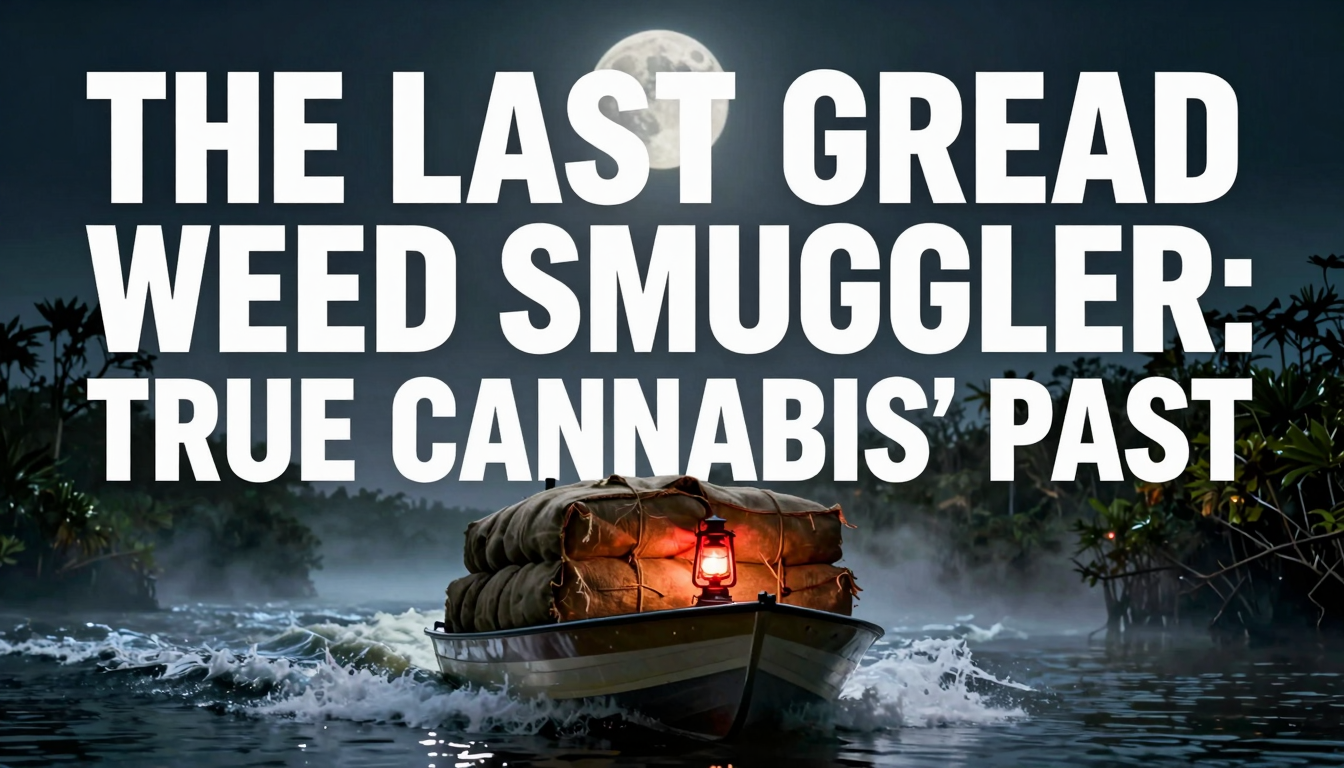
You’ve never met a smuggler like the one I’m about to introduce you to — unless you count the stories your dealer’s dad used to whisper over a shared joint.
They called him ‘The Ghost of the Gulf.’ By the mid-1980s, he’d moved more than 200 tons of Colombian Gold into the Florida Keys without a single bust. No planes lost. No boats seized. Just millions of tax-free dollars and a lifestyle that would make Tony Montana blush. He was the last great weed smuggler — and his story, like so many others, is the forgotten backbone of the cannabis industry you love today.
The Golden Age of Green Gold
The Men Who Moved Mountains
In the 1970s and early 80s, smuggling cannabis wasn’t just a job — it was a way of life. From the Caribbean to the Gulf Coast, a loose network of pilots, captains, and beach runners moved thousands of pounds of sinsemilla and brick weed into the US. The names are folklore: Rafael Caro Quintero in Mexico, Robert Platshorn (who ran operations from Florida to New York), and the infamous ‘Operation Grouse’ kingpins.
These weren’t your corner boys. They were logistics geniuses. They used everything from shrimp boats to Cessnas to zodiac rafts. One legendary figure — let’s call him ‘Captain K’ — told me he once stashed $3 million in cash inside a hollowed-out refrigerator on a beach in the Florida Panhandle. “We didn’t trust banks,” he laughed. “We trusted the sand.”
The Risks Were Real
It wasn’t all piña coladas and paradise. The penalty for getting caught? Federal mandatory minimums of 10 years to life. By 1986, the US Coast Guard had seized over 1.5 million pounds of cannabis annually. The DEA’s ‘Green Sweep’ operations were locking up smugglers by the dozen. Yet the demand never stopped. In 1985, Americans consumed an estimated 12,000 metric tons of illegal cannabis — almost all of it smuggled.
The last great weed smuggler wasn’t a single person; it was an era. By the early 1990s, domestic indoor and outdoor grows began to replace foreign imports. The smuggler’s golden age was ending, but the stories — and the genetics — survived.
The Modern-Day Smuggler: A Different Kind of Risk
From Boats to Boardrooms
Today’s high-stakes weed world looks different, but the spirit is alive. The last great weed smuggler archetype has evolved into legacy growers and underground seed breeders who move genetics instead of bales. Think of the legendary ‘Chemdog’ story — a single bag of high-grade smuggled from Colorado to New York in 1991, which spawned the entire Chemdog family of strains. That bag? It came from a smuggler who’d driven it cross-country in a rental car.
Now, legacy seedbanks like Greenpoint Seeds and breeders like Top Dawg Seeds keep that outlaw DNA alive. They don’t run from the law — they run toward quality, preserving the heirloom genetics that smugglers risked everything to bring to our shores.
The Parallel: Black Market vs. Legal Market
Even in 2026, with 24 states fully legal for adult use, the black market is still massive. The 2025 Cannabis Market Report estimated that 35-40% of all US cannabis sales remain in the illicit or gray market. Why? High taxes, strict regulations, and a nostalgia for the old ways. Some of the most sought-after strains today — like Sour Diesel — are direct descendants of smuggled genetics.
“The thrill was real,” says ‘Captain K,’ now a legal grower in Oregon. “But I don’t miss looking over my shoulder. Now I just look at my terpene charts.”
The Legacy Lives On
What We Owe the Outlaws
Every time you buy a bag of top-shelf flower at a licensed dispensary in California or Michigan, you’re standing on the shoulders of smugglers. They pioneered the logistics. They bred the genetics. They took the risks so we could enjoy the reward.
Some of the most famous strains in history — Haze, Northern Lights, Skunk #1 — were stabilized and spread through smuggling networks. Without them, the legal market would have nothing to sell but ditch weed.
The Final Voyage
As for the last great weed smuggler? He’s still out there, probably retired in a small coastal town with a greenhouse full of heirloom strains. He doesn’t talk much. But when he does, he tells stories of moonlit landings, burning engines, and the smell of fresh cannabis drifting across the water.
“I’d do it all again,” he told me. “But I’m glad my grandkids don’t have to.”
What This Means For You
Whether you’re a home grower, a dispensary shopper, or just a cannabis history nerd, the outlaw legacy is your legacy. The next time you light up a joint of Blue Dream or crack open a jar of OG Kush, remember: those genetics were once smuggled across borders in the dead of night. The last great weed smuggler might be a ghost, but his green thumb left fingerprints all over today’s legal market.
Respect the past. Enjoy the present. And if you ever meet an old guy with a boat and a twinkle in his eye — buy him a drink.