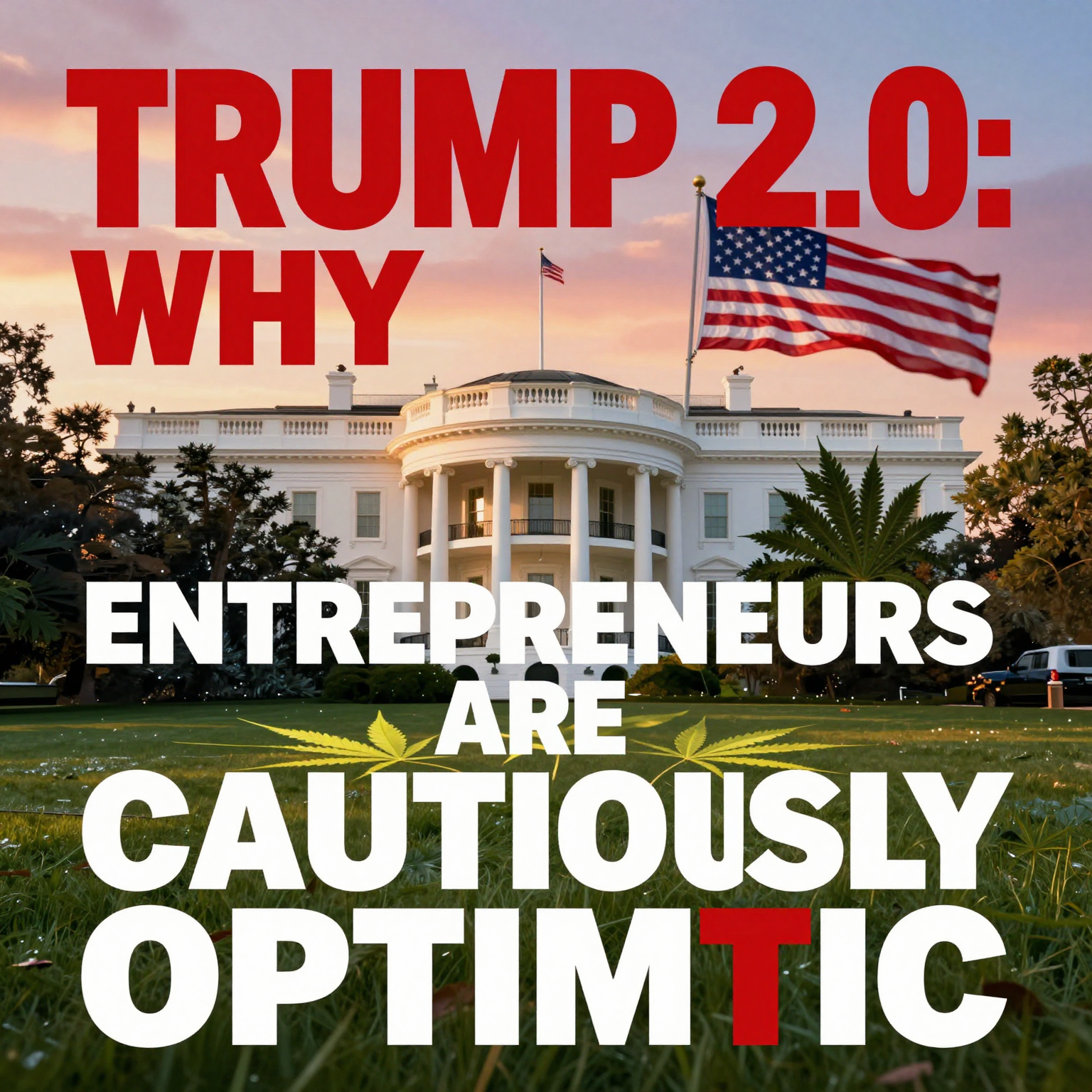
The 2026 midterms are heating up, and so is a conversation few thought we'd be having: Donald Trump as a potential cannabis reform ally.
Yes, you read that right. The same administration that oversaw the Jeff Sessions memo and a DOJ that treated state-legal operators like cartel targets is now being whispered about in boardrooms and dispensary backrooms as a possible catalyst for change. It sounds like a plot twist from a political thriller, but Trump cannabis reform 2026 is suddenly a phrase industry insiders are tossing around with a mix of hope, skepticism, and a healthy dose of reality.
The Shift in the Wind
Let's rewind. During his first term, Trump's record on cannabis was a confusing loop of mixed signals. He said he'd leave it to the states, then his DOJ cracked down. He supported the STATES Act, then let it die. But now? The landscape has changed. Polls show over 70% of Americans support legalization, including a majority of Republicans. In states like Florida, Ohio, and Pennsylvania, medical and adult-use programs are generating billions in tax revenue. Trump, ever the pragmatist, appears to be reading the room.
Recent reports from lobbyists and former administration officials suggest that Trump's 2026 platform may include a federal rescheduling or even a limited states' rights framework. Why? Because cannabis is no longer a fringe issue—it's a jobs and tax machine. Michigan alone pulled in $3.2 billion in adult-use sales in 2025, and states like New York are finally catching up after a rocky rollout. The federal government is leaving billions on the table, and Trump, a man who loves a deal, sees the leverage.
Policy Possibilities on the Table
H2: Rescheduling vs. De-Scheduling
The biggest battle right now is between rescheduling (moving cannabis from Schedule I to Schedule III) and full de-scheduling (removing it from the Controlled Substances Act entirely). The DEA's current proposal to reschedule is seen by many as a half-measure—it helps with research and tax burdens (bye-bye, 280E), but it doesn't end federal prohibition.
Trump cannabis reform 2026 could lean either way. Sources close to his campaign say he's been advised that a full de-scheduling play would be a massive win with libertarian-leaning voters and small business owners. But it's a political minefield with law-and-order types. The safe bet is a rescheduling push, which would still be a historic win for the industry, freeing up capital and allowing operators like Blue Dream growers to write off legitimate business expenses.
H3: Banking and SAFE Banking Plus
Remember the SAFE Banking Act? It's been stuck in Congress like a stubborn seed in a grinder. But under a Trump 2.0 administration, a modified version called SAFE Banking Plus is gaining traction. This would not only protect banks serving state-legal businesses but also create a federal framework for payment processing. More than 800,000 cannabis industry employees are currently forced to operate in cash—a security nightmare. A banking fix would legitimize the entire supply chain, from the cultivator using ILGM Seeds to the budtender at your local shop.
Market Reactions: The Green Rush 2.0?
Wall Street is already sniffing around. After the 2024 election, cannabis stocks saw a brief surge, then a pullback as reality set in. But in early 2026, with whispers of Trump's openness, ancillary stocks like GrowGeneration and Scotts Miracle-Gro are up 15% month-over-month. MSOs (multi-state operators) like Trulieve and Curaleaf are quietly expanding again, betting on federal tailwinds.
But the mood among small entrepreneurs is more measured. "I've been burned before," says Maria, owner of a boutique dispensary in Denver. "Every election cycle, someone promises reform. I'll believe it when I see it." That caution is wise—Trump's base includes a vocal anti-cannabis faction, and any reform will be a tightrope walk.
The State-Level Wildcard
Even if Trump pushes reform, states like Idaho, Kansas, and Nebraska remain prohibition holdouts. A federal shift could force their hand, but it could also create a patchwork where red states double down. The real action is in the swing states: Arizona, Michigan, Pennsylvania, and Georgia have the most to gain from a federal green light, both politically and economically.
What This Means For You
Whether you're a grower, dispensary owner, or just a connoisseur who wants to buy Girl Scout Cookies without worrying about your bank account, Trump cannabis reform 2026 matters.
- If rescheduling happens: Your tax bill drops. Banks open. Research explodes. But full legalization remains a state-by-state slog.
- If de-scheduling happens: The floodgates open. Interstate commerce becomes real. Prices drop, but so do barriers to entry.
- If nothing happens: We're back to the same grind. But the fact that this conversation is happening at all is a sign that the Overton window has shifted.
Stay informed, stay engaged, and keep your grow lights on. The next 12 months could redefine everything. And for once, the whispers from Mar-a-Lago might actually be worth listening to.
*— Angelica M., Cannabis Enthusiast & Senior Writer, StrainHub*